
All creative workshop scents are subject to seasonal demand.
If your favorite scent—or the combination you'd love to create—isn't available during the workshop, don't worry, just CLICK HERE!
We offer a much larger fragrance collection in our online shop.
You're welcome to place an order after the workshop, and we'll handcraft your candle in the scent or custom blend of your choice. It's a great way to take home exactly the fragrance you had in mind, even if it wasn't part of the workshop selection.
Goat’s Milk Soap-making Workshop Menus:
(use the arrows to scroll through menus. Zoom in!)
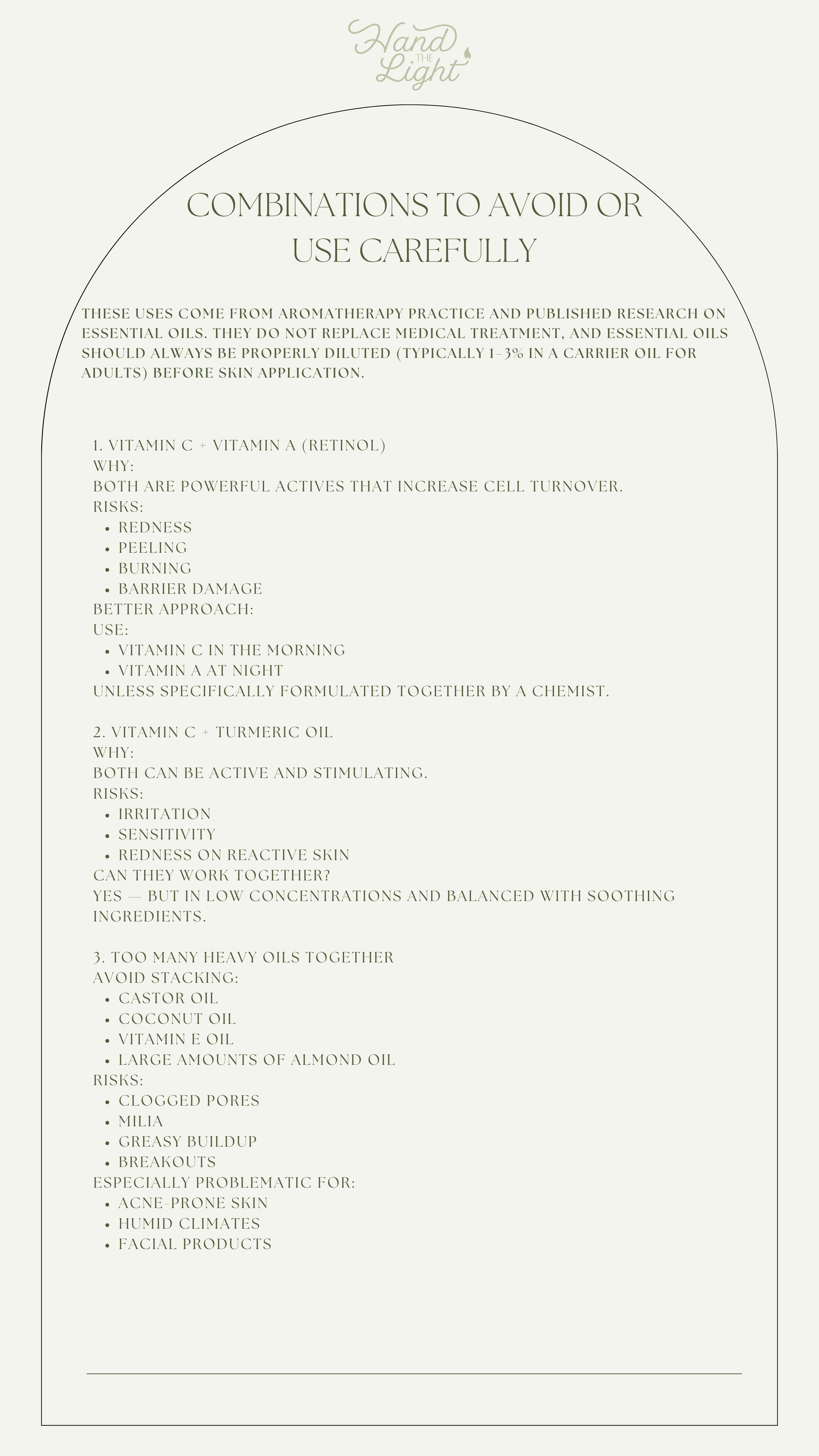
Combinations to Avoid or Use Carefully
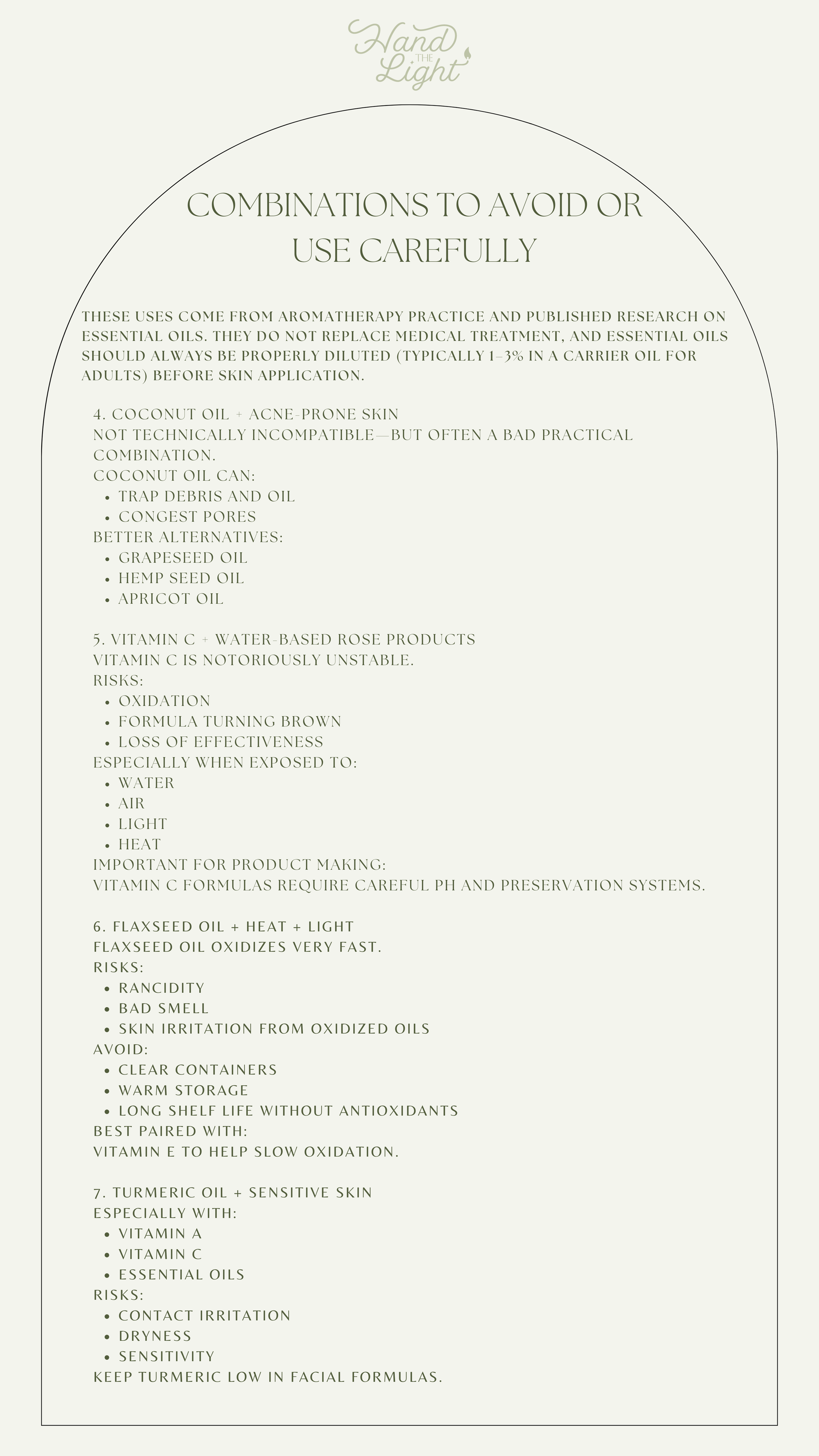
Combinations to Avoid or Use Carefully
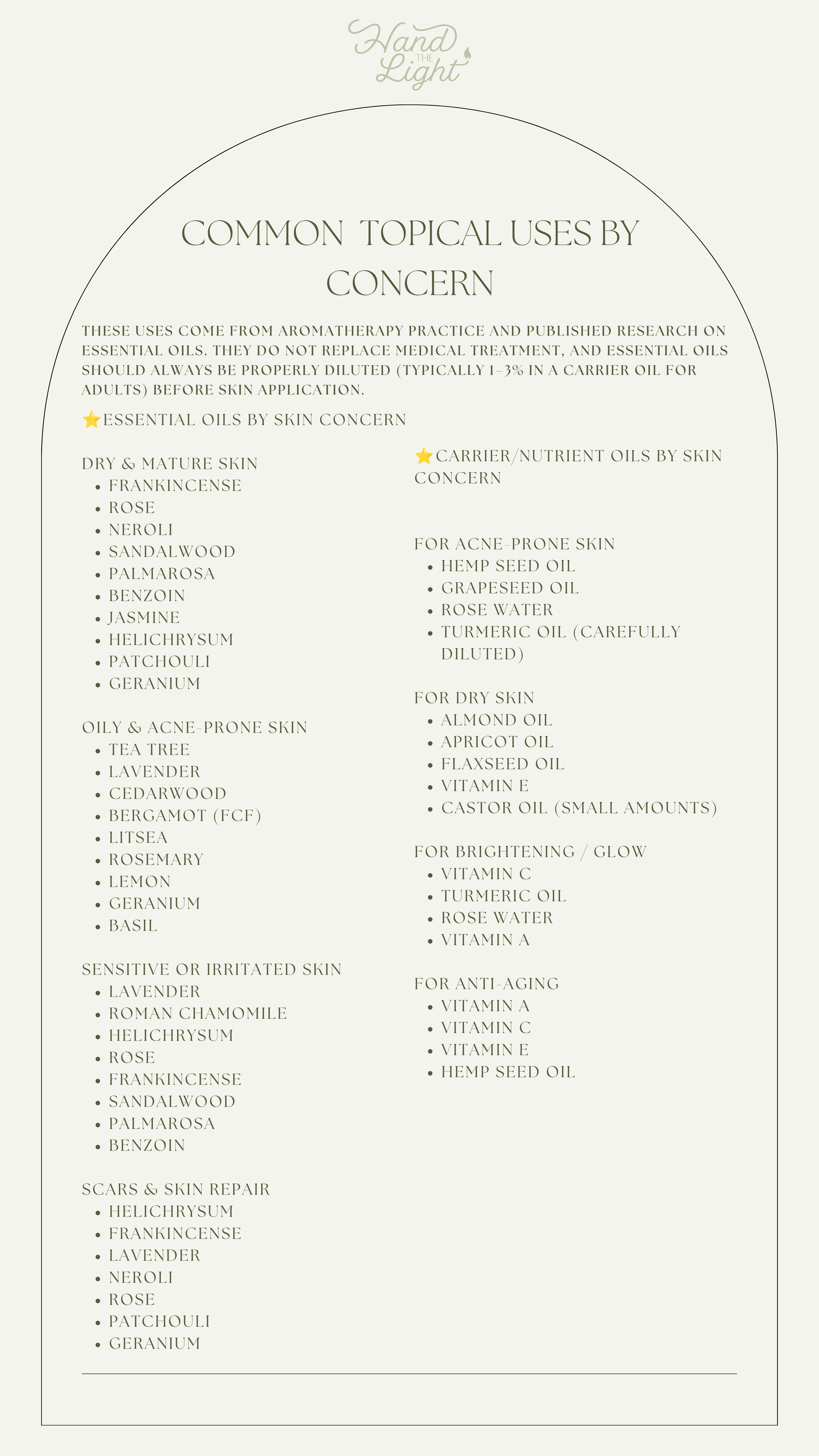
Common topical uses by concern
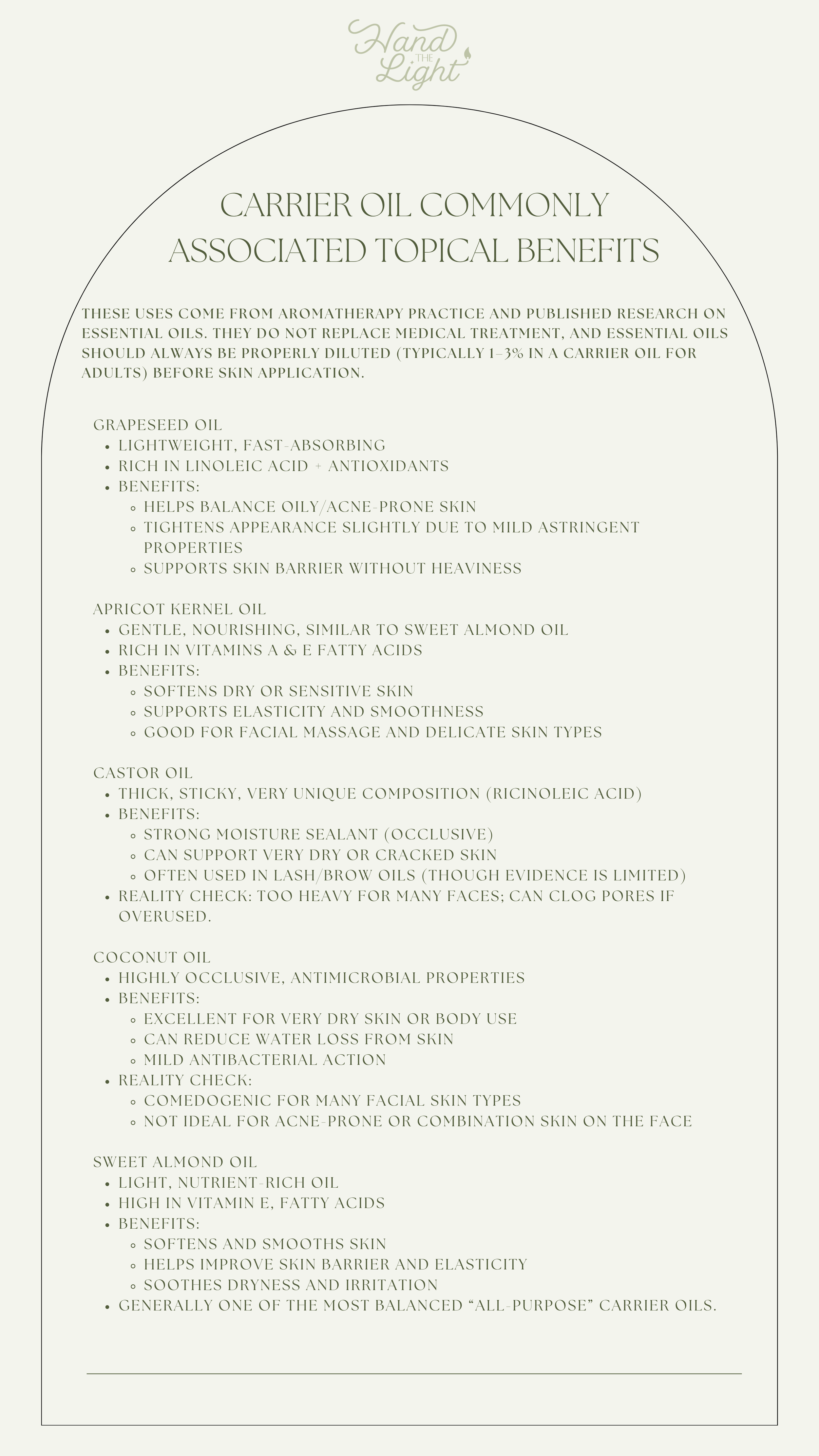
Carrier oil commonly associated topical benefits
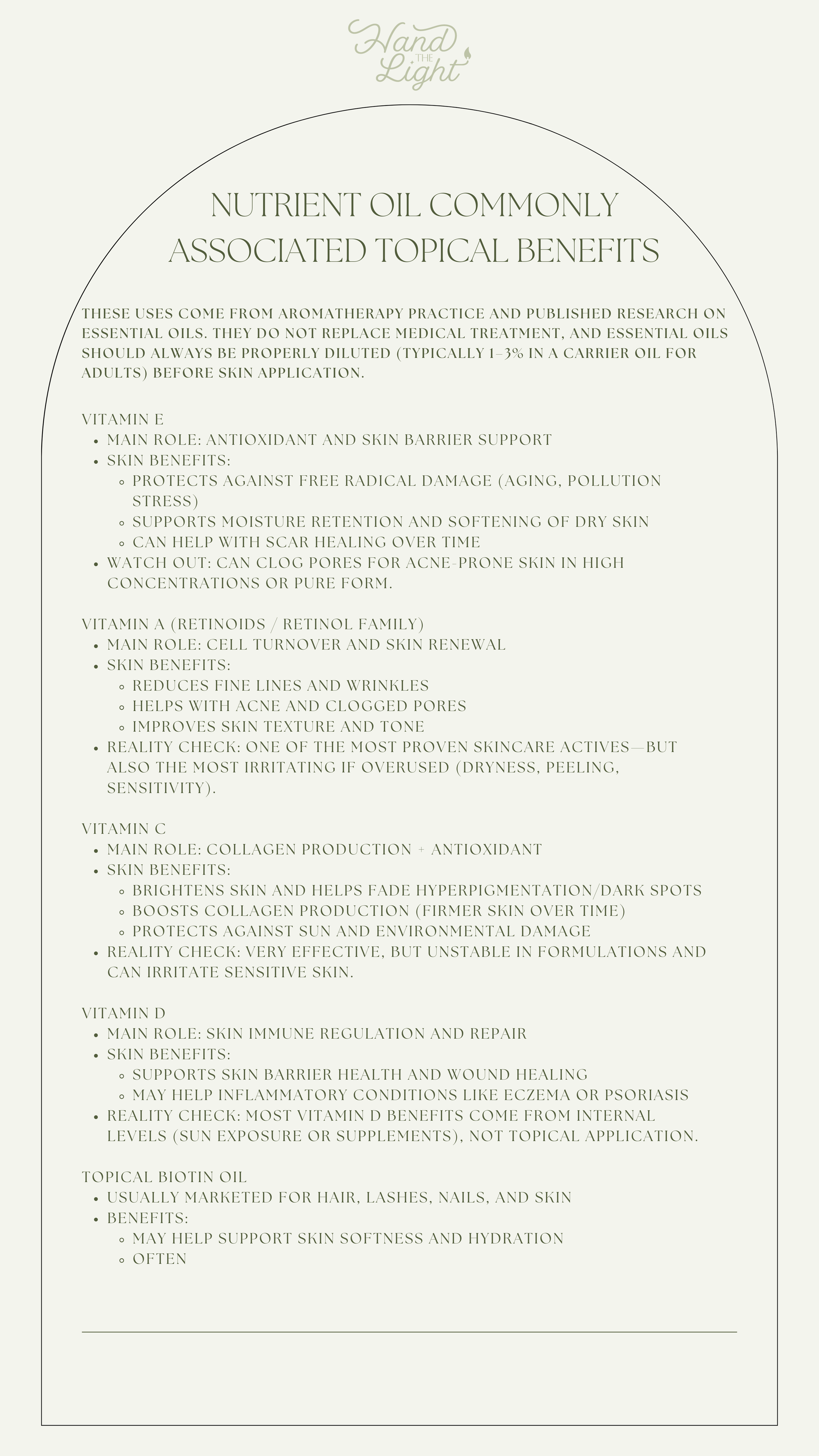
Nutrient oil commonly associated topical benefits
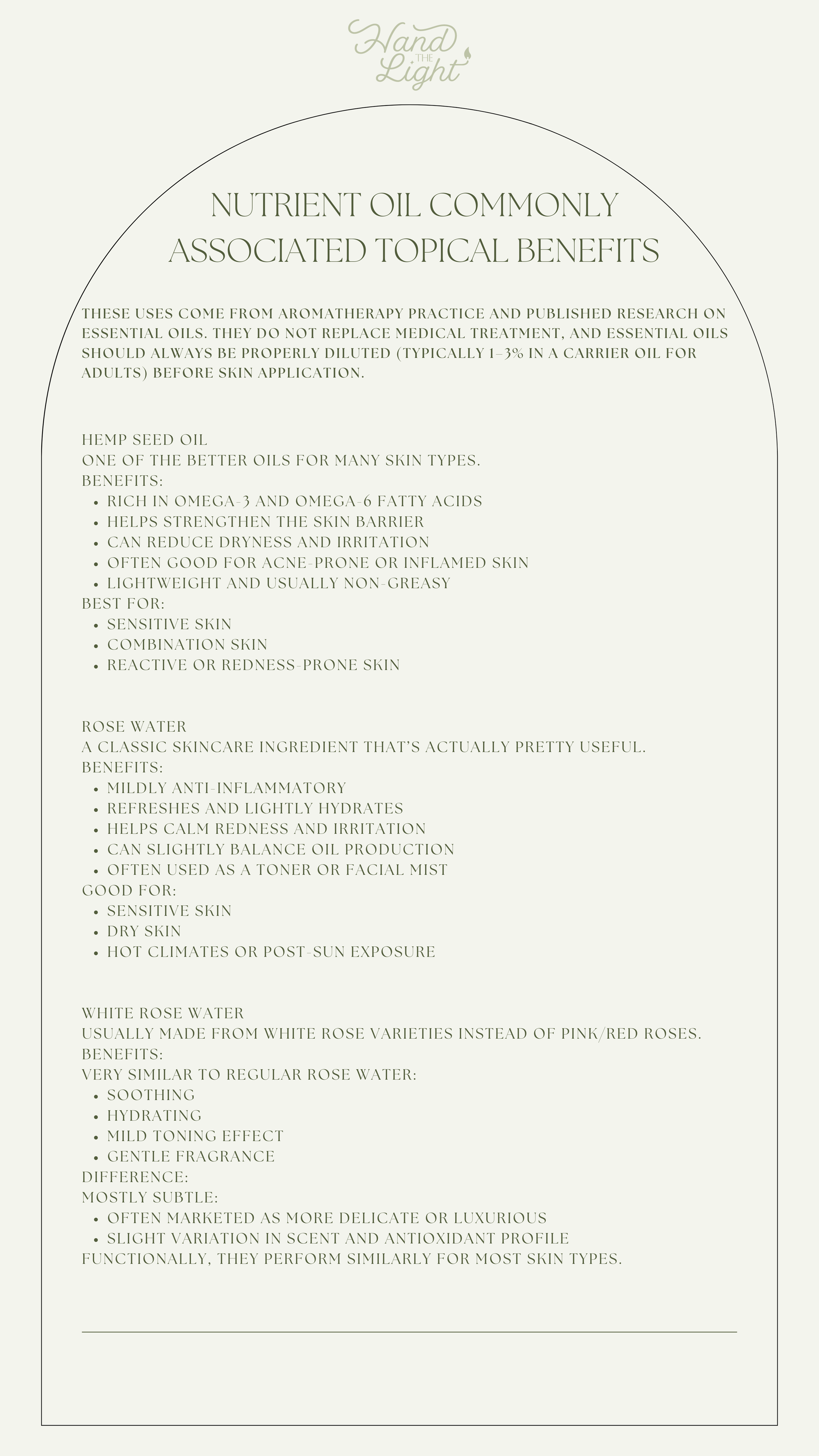
Nutrient oil commonly associated topical benefits
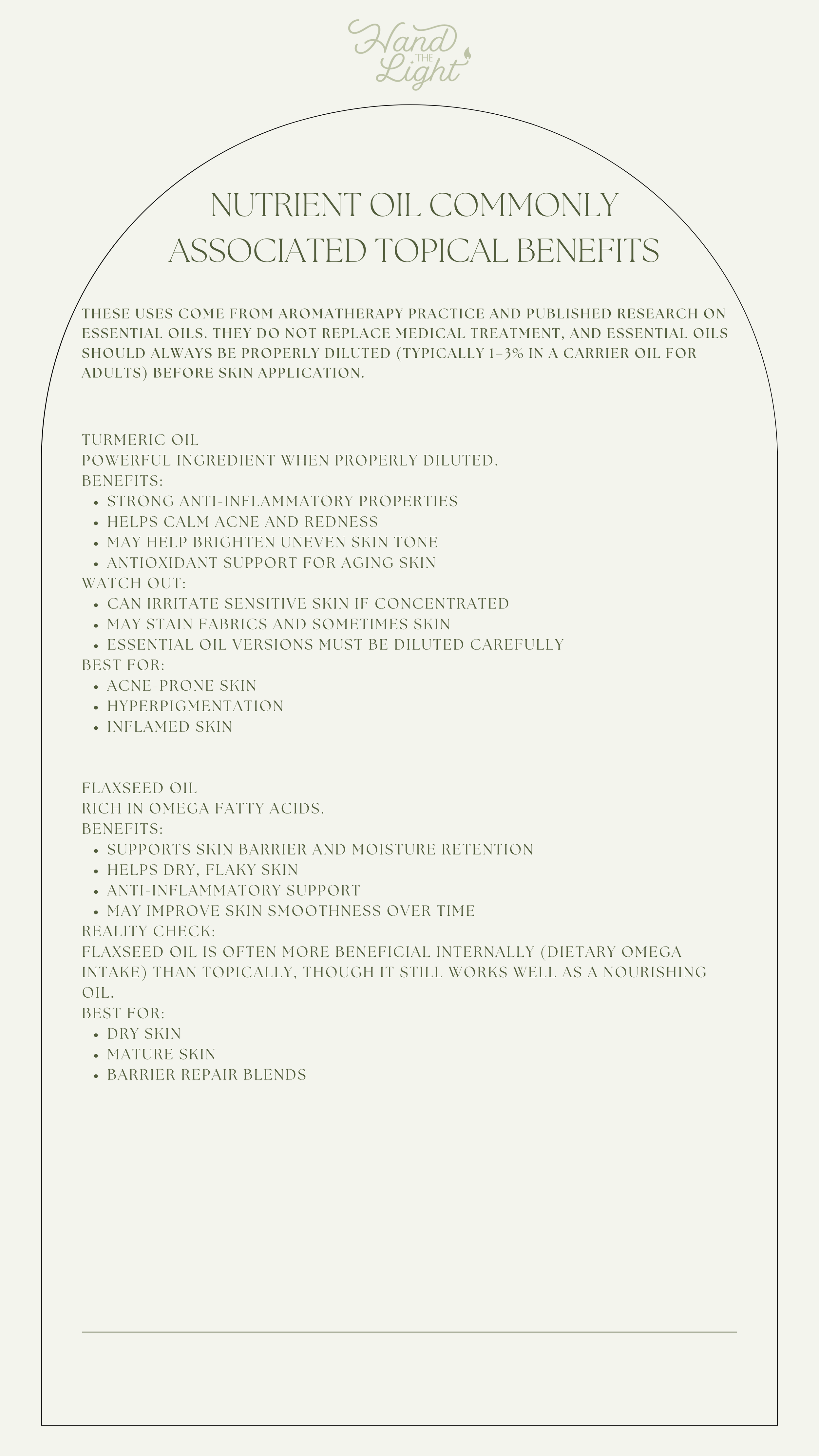
Nutrient oil commonly associated topical benefits
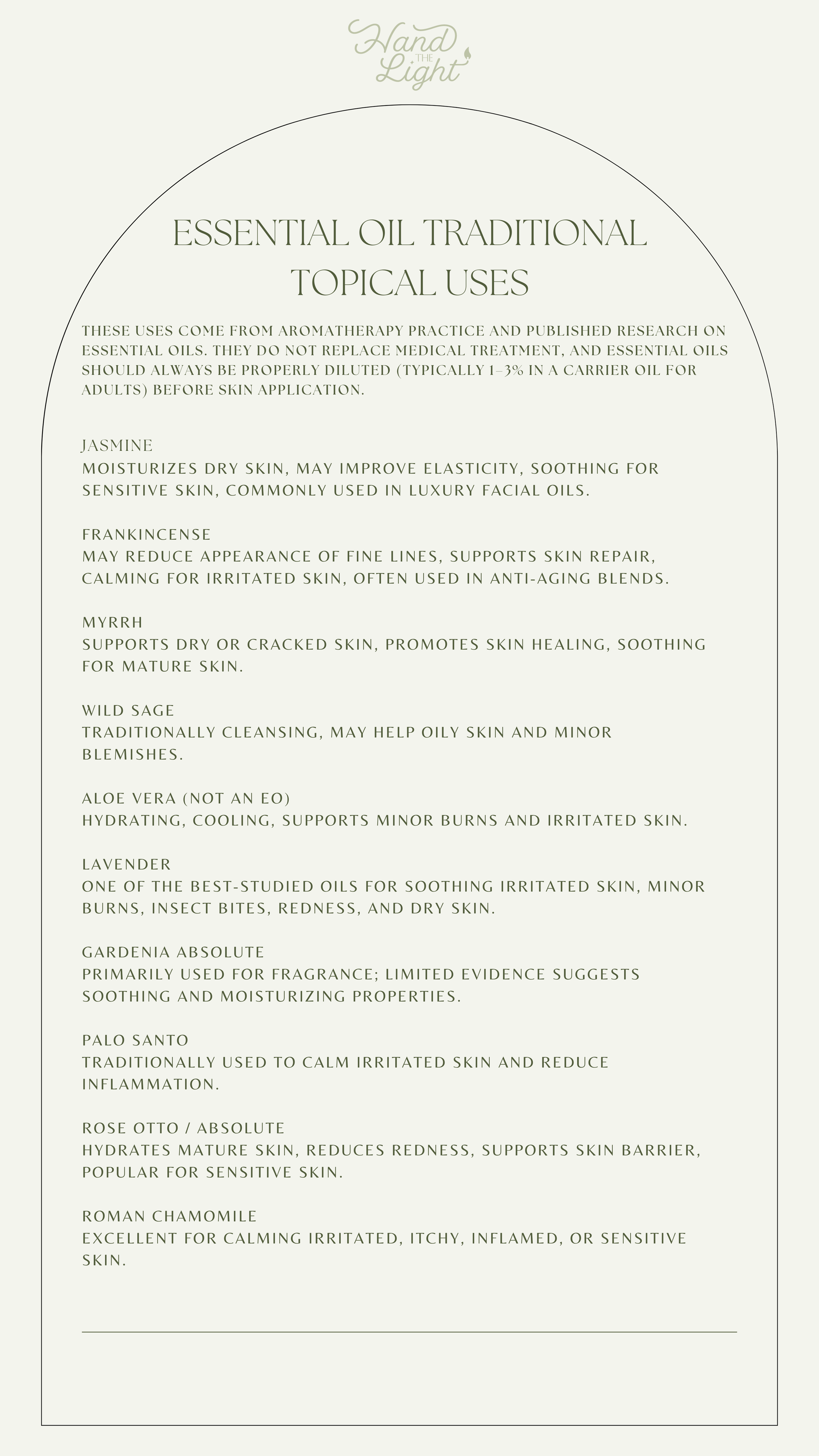
Essential oil traditional topical uses
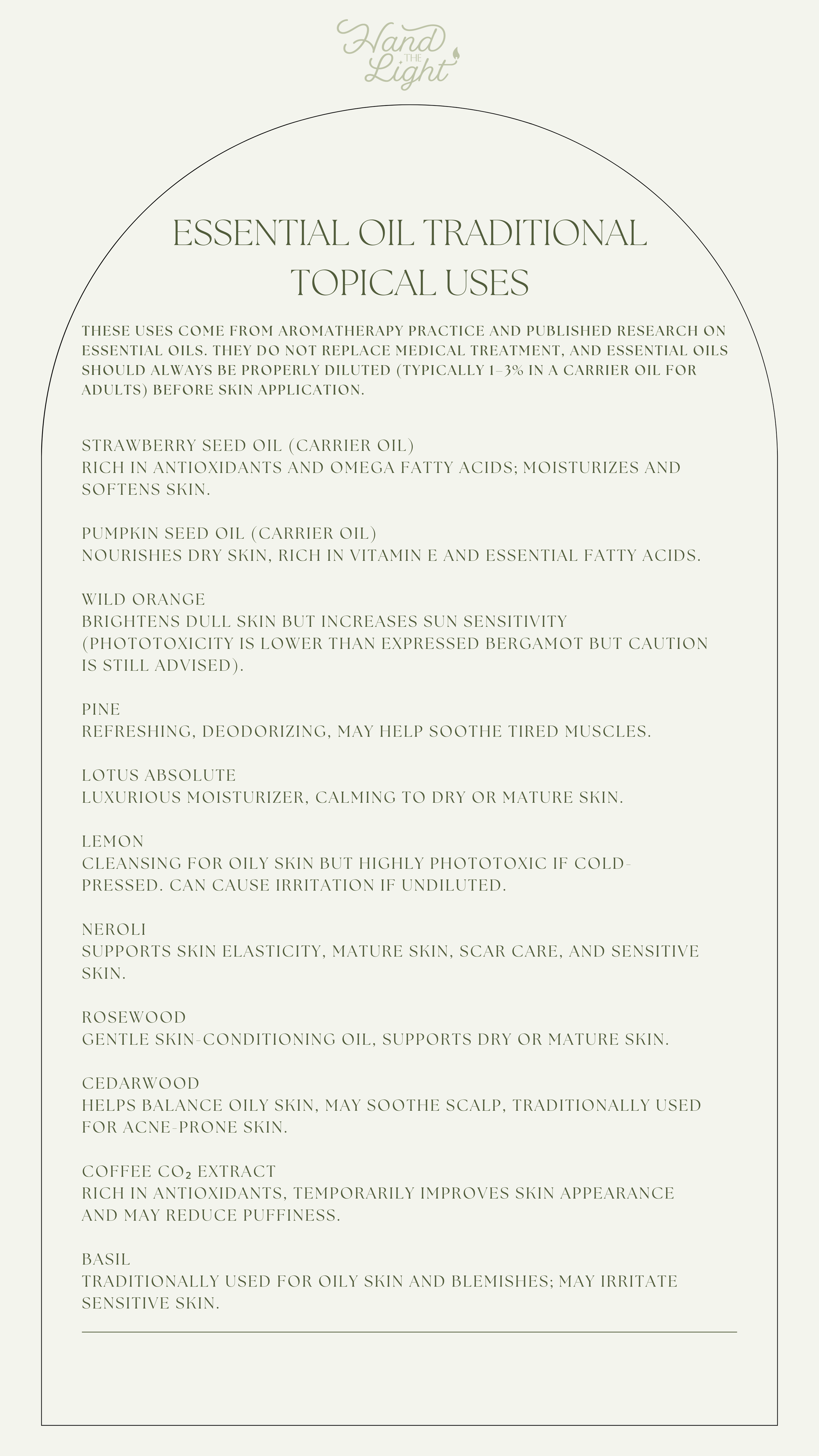
Essential oil traditional topical uses
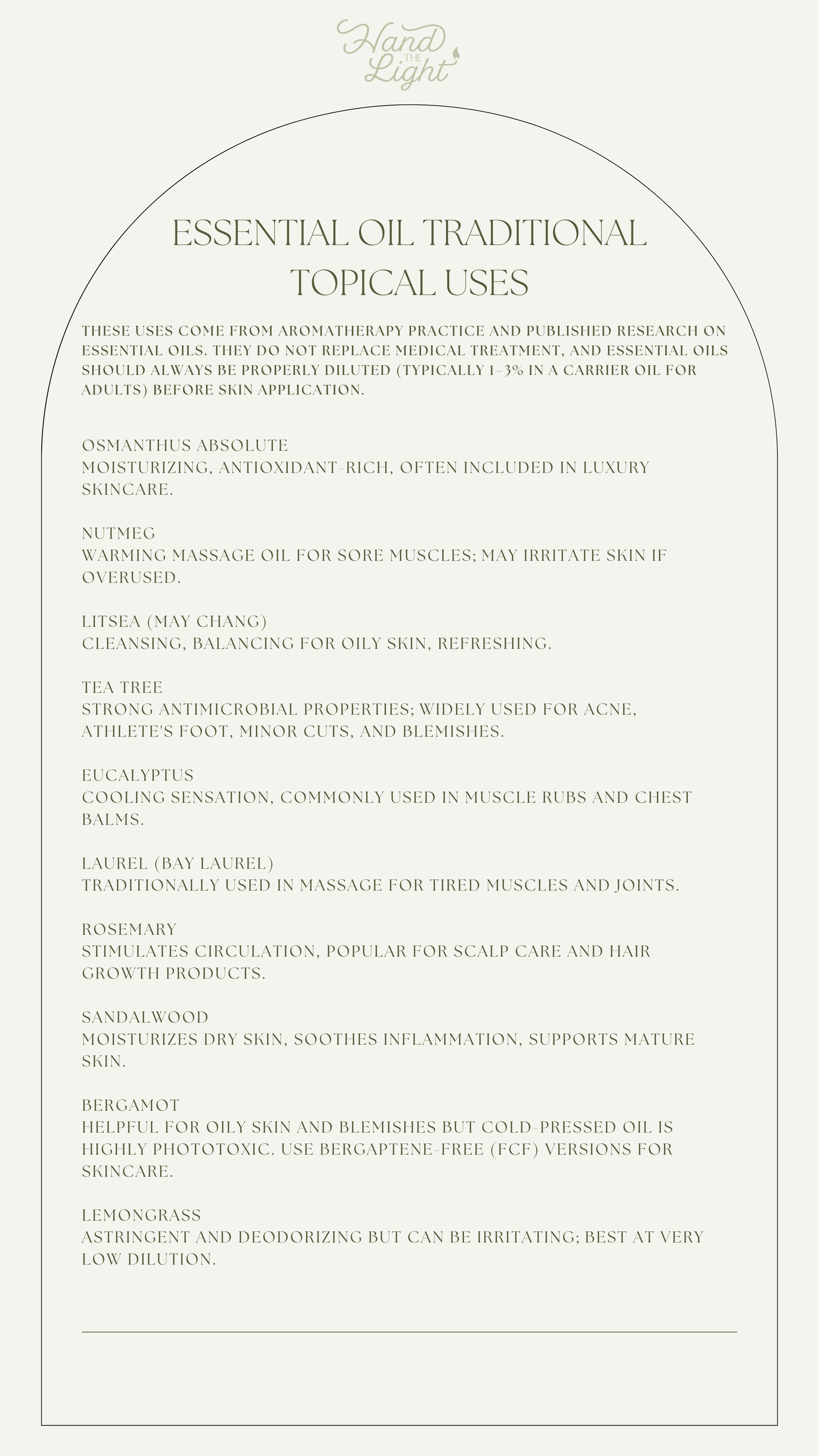
Essential oil traditional topical uses
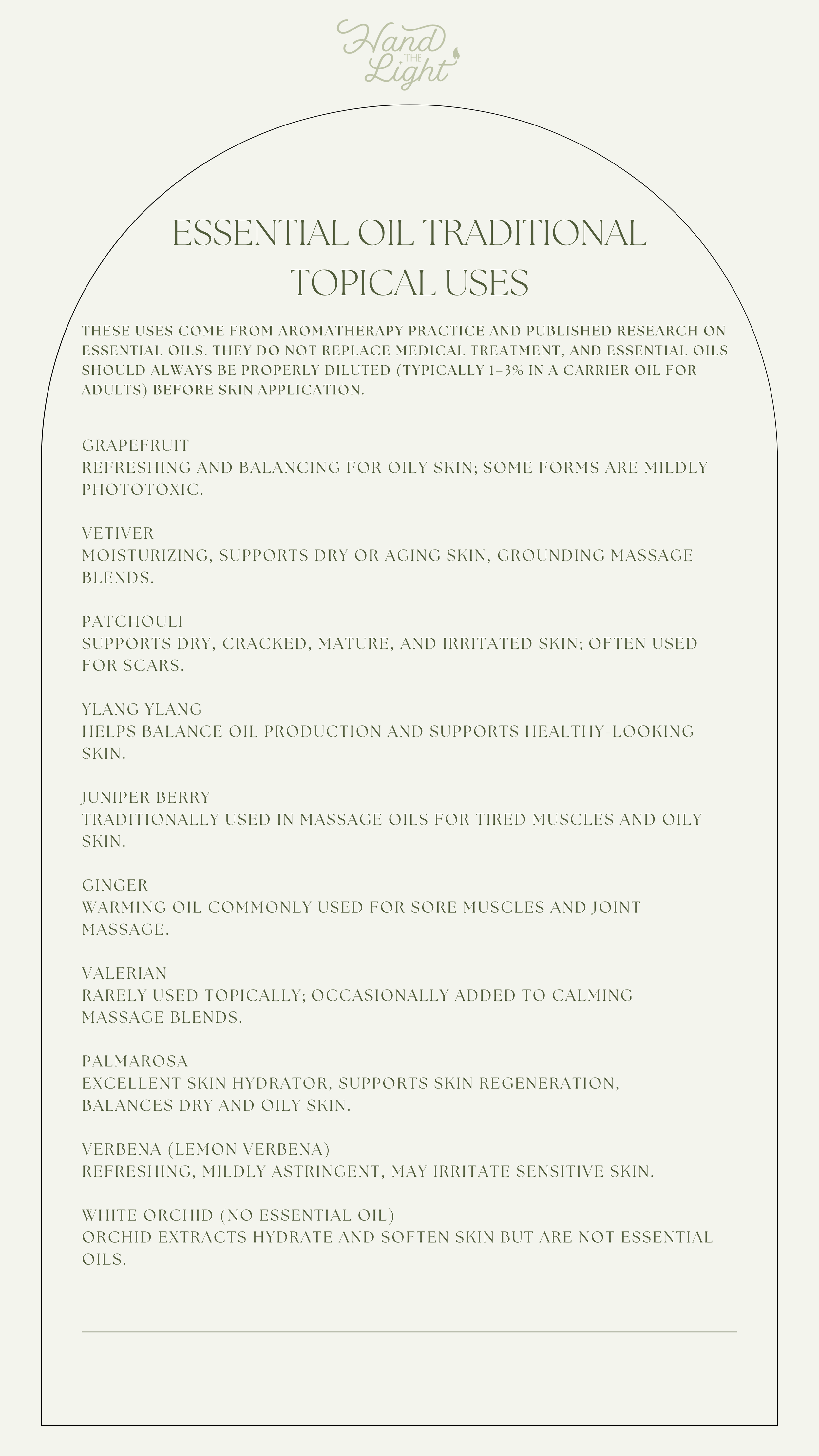
Essential oil traditional topical uses
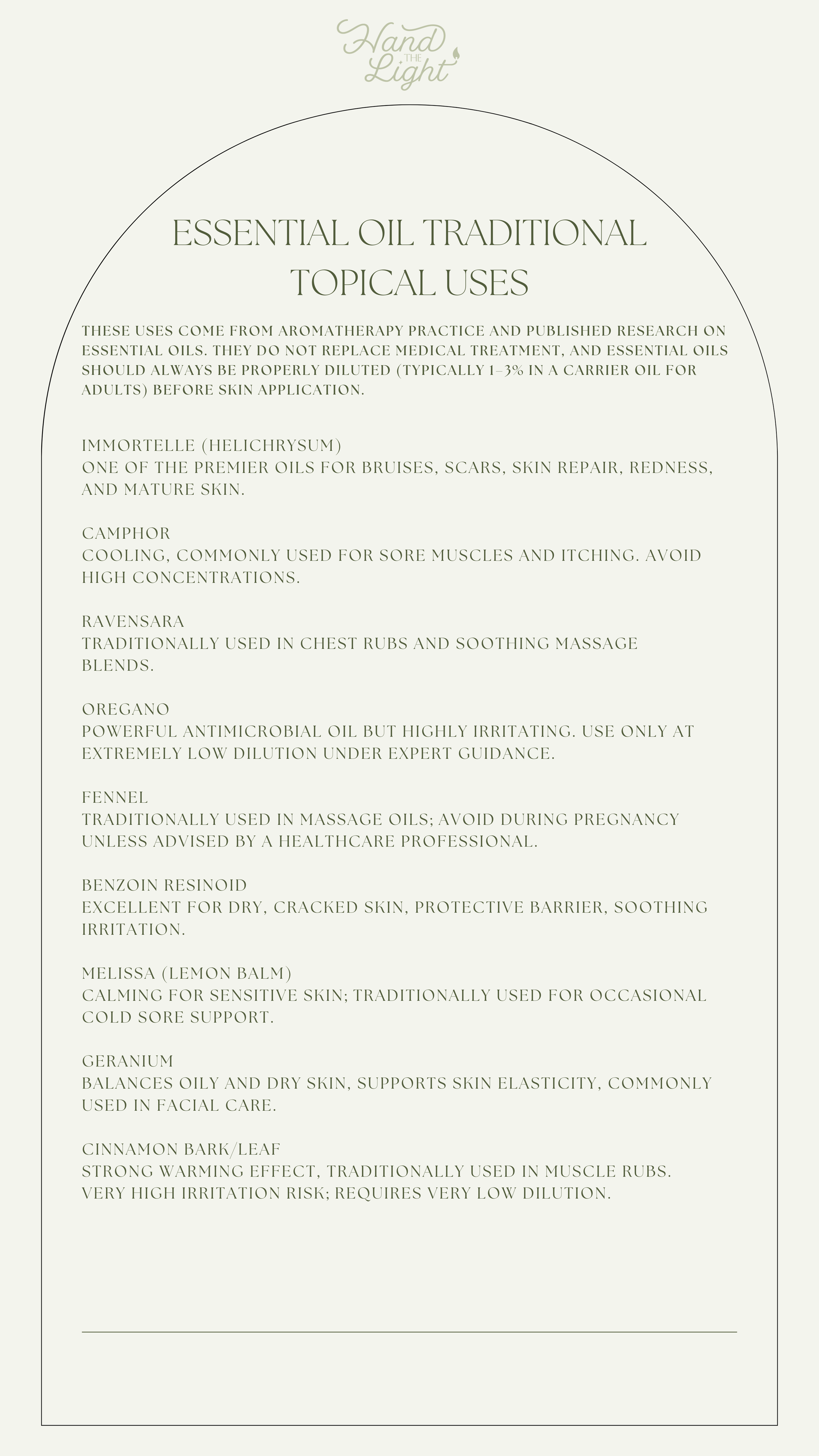
Essential oil traditional topical uses
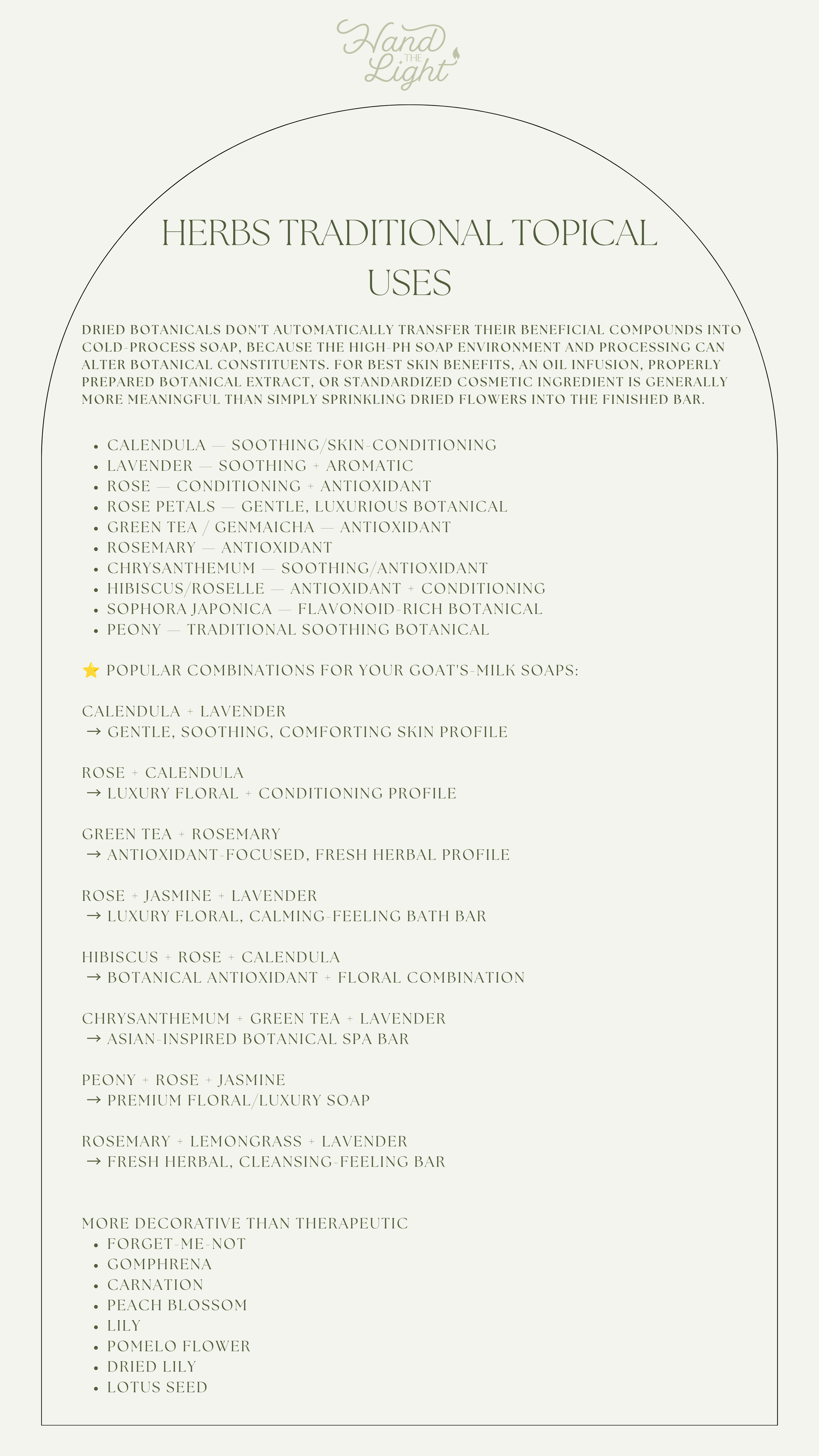
Herbs traditional topical uses
Soy Candle-making Workshop Menu:
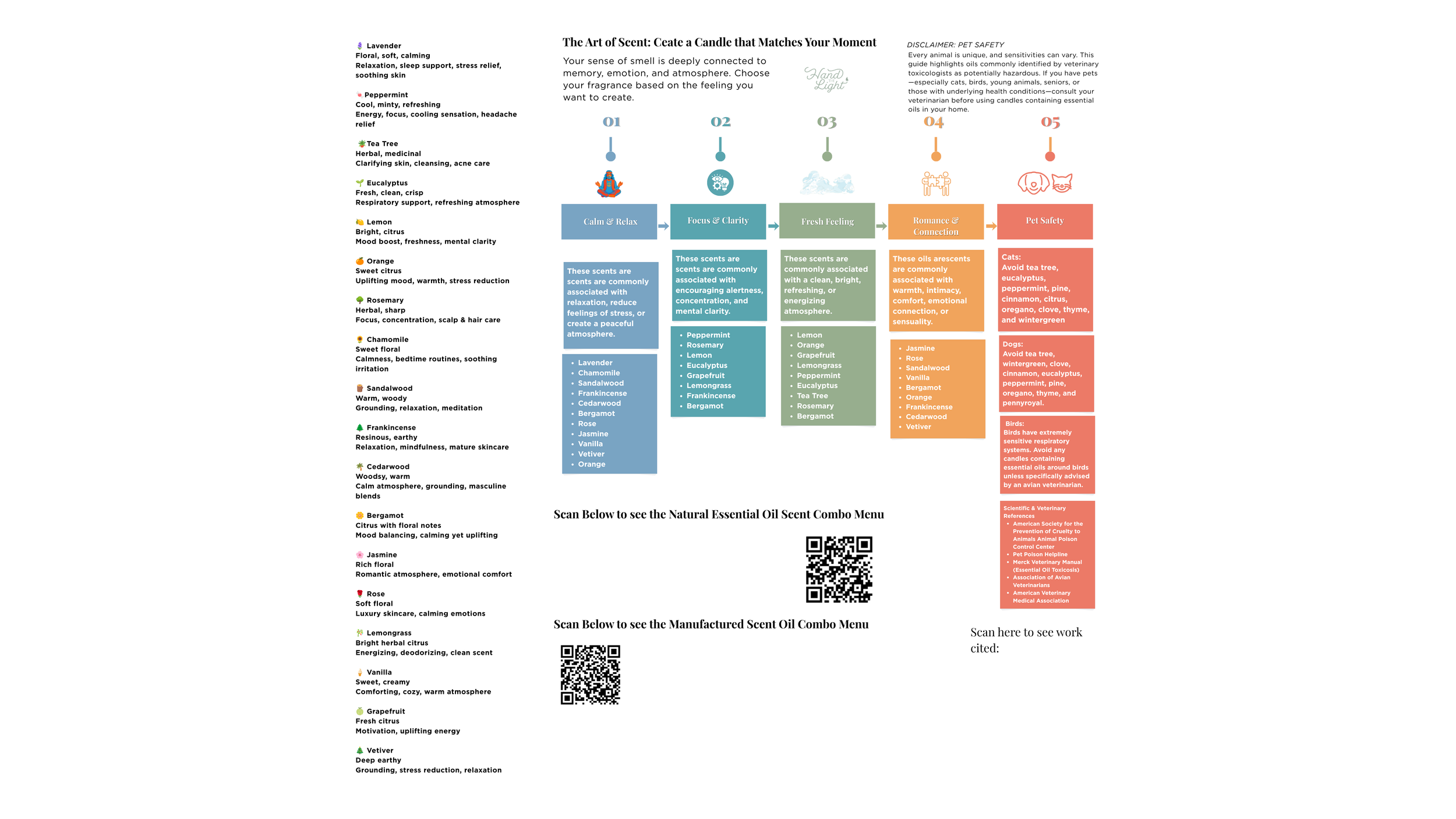
Frequently Asked Questions
-
Your Nose Is Connected to Your Emotional Brain
Unlike your other senses, smell has a direct pathway to areas of the brain involved in emotion and memory—including the amygdala and hippocampus. This is why a familiar fragrance can instantly remind you of a childhood home, favorite vacation, or loved one.
Researchers refer to this relationship between scent and emotion as aromachology—the study of how fragrances influence mood, perception, and behavior.
What science suggests:
✓ Pleasant scents may influence mood
✓ Certain aromas may increase feelings of calm or alertness
✓ Smells often trigger emotional memories more quickly than sights or sounds
✓ Personal experiences and cultural background strongly influence how a scent is perceived
-
Creating a Balanced Fragrance
Professional perfumers build fragrances in layers, often described as notes.
Top Notes: These are the first scents you notice.
Usually:
Citrus
Mint
Herbs
Light fruits
Purpose:
Create brightness and first impressions.Examples:
Lemon • Bergamot • Grapefruit • PeppermintMiddle Notes: Often called the "heart" of a fragrance.
Usually:
Lavender
Rose
Jasmine
Sage
Rosemary
Purpose:
Give the fragrance personality and balance.Base Notes: These linger the longest.
Usually:
Cedarwood
Sandalwood
Vanilla
Amber
Patchouli
Fir
Purpose:
Add warmth, richness, and longevity.A Simple Formula
40% Base Notes
40% Middle Notes
20% Top Notes
This isn't a rule—just a starting point that often creates a balanced scent.
-
Different rooms often benefit from different fragrance styles based on the activities that happen there.
Bedroom Suggested profile: Soft and relaxing
Lavender
Vanilla
Cedarwood
Home Office Suggested profile: Bright and mentally refreshing
Rosemary
Lemon
Peppermint
Kitchen Suggested profile: Clean and crisp
Lemon
Basil
Bergamot
Bathroom Suggested profile: Spa-inspired
Eucalyptus
Lavender
White Tea
Living Room Suggested profile: Warm and inviting
Sandalwood
Amber
Cashmere
Vanilla
Entryway Suggested profile: Fresh first impression
Citrus
White Tea
Rain Water
Fir
-
Your favorite scent isn't necessarily the one with the strongest research—it may be the one your brain has learned to associate with a positive experience. By intentionally using the same fragrance during activities like reading, meditation, or creative work, you may begin to strengthen those associations over time through learned scent-memory connections.